Five-Star Hotel Scent Consistency Recreated by a Home Diffuser
Cold-air diffusion and calibrated output recreate the hotel effect at home.

To recreate luxury hotel scent at home, use a cold-air diffuser with coverage matched to the room, one signature fragrance, and adjustable output and scheduling. The five-star effect depends on how the scent spreads, even when the oil is expensive. Understanding how hotels design and calibrate that system makes it possible to reproduce a steady, ambient scent.
Why luxury hotels treat scent as a core brand system, not a finishing touch
A hotel’s signature fragrance has a business purpose. It gives the hotel a smell guests can recognize before they have fully taken in the design around them. The brief is therefore bigger than making the lobby pleasant. Hotels want an emotional imprint that survives checkout and can call the place to mind long afterward. Scent belongs to the brand system for the same reason that architecture and interiors do, because it shapes how the property is perceived.
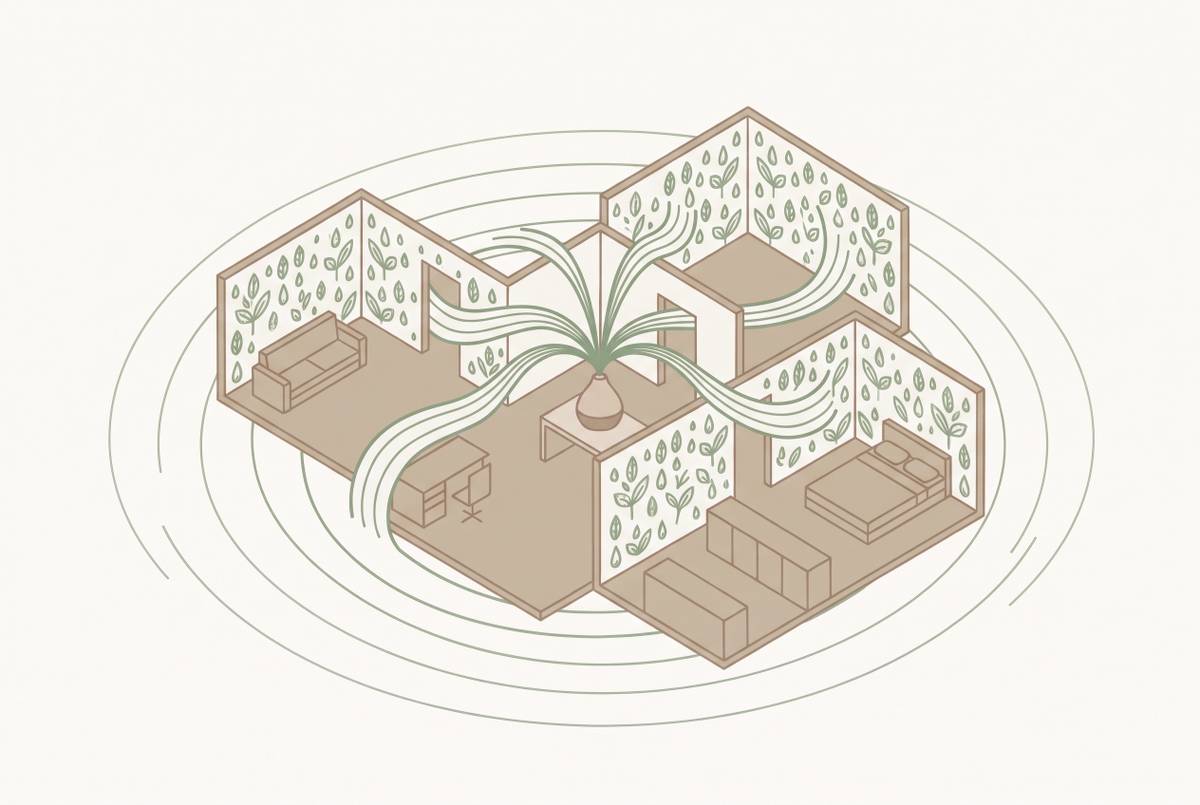
Maison 21G describes a signature scent as “an invisible thread” connecting the property’s touchpoints, including lobbies, suites, and spa zones. That thread makes the spaces feel like parts of the same hotel even when they look different or serve different uses. A fragrance that feels carefully integrated in the lobby but overwhelming in a suite would break that connection, even if the oil came from the same bottle. The delivery system must therefore account for the spaces it serves.
Why can something invisible bring back memories that last so long? The olfactory bulb has a direct relationship with the limbic system, the network involved in memory and emotion. That relationship helps explain the Proust phenomenon, in which a scent evokes a vivid memory of an earlier experience. A hotel can give the guest experience a stable sensory identity that may later help bring back an emotionally significant memory.
Fragrance is a designed part of the experience, whose effectiveness depends on how well the scent, the setting, and the delivery fit together.
How a hotel signature scent is actually designed and what makes it consistent
Maison 21G begins the design process with questions about the property’s identity. Is the hotel contemporary or timeless? What should guests feel when they arrive, and are there local ingredients or parts of the culture that the scent could draw on? These questions set the brief before individual notes are chosen. A woody-citrus direction might suit the energy of an urban boutique property, while oceanic and tropical accords might support the relaxed character of a coastal resort.
St. Regis offers a useful illustration through “Caroline’s Four Hundred,” whose exotic woods and American Beauty roses evoke Caroline Astor’s January 1900 ball. Magna Pars in Milan takes a different approach, making olfactory notes part of the identity of its suites and inviting guests to select a fragrance at an “olfactory check-in.” These are different expressions of the same design question. What should the fragrance tell a guest about this particular place?
The answer also needs a structure that lasts. Sandalwood, amber, musk, and cedarwood are popular hotel base notes because they last and help hold the fragrance together after its opening fades. Brightness on arrival is only part of the job. A scent that smells good at first but soon loses its base will struggle to stay in the background throughout the hotel’s day. The relationship between the opening and the base is therefore functional as well as aesthetic.
Maison 21G describes on-site trials that test how the fragrance works with the climate, airflow, room size, and surface materials at different times of day. These trials move the work out of the bottle and into the building. They also establish the right diffusion intensity, because an otherwise suitable fragrance can feel overwhelming at the wrong strength. At a calibrated level, it becomes part of the room.
Why cold-air diffusion is the technology that makes hotel-grade consistency possible
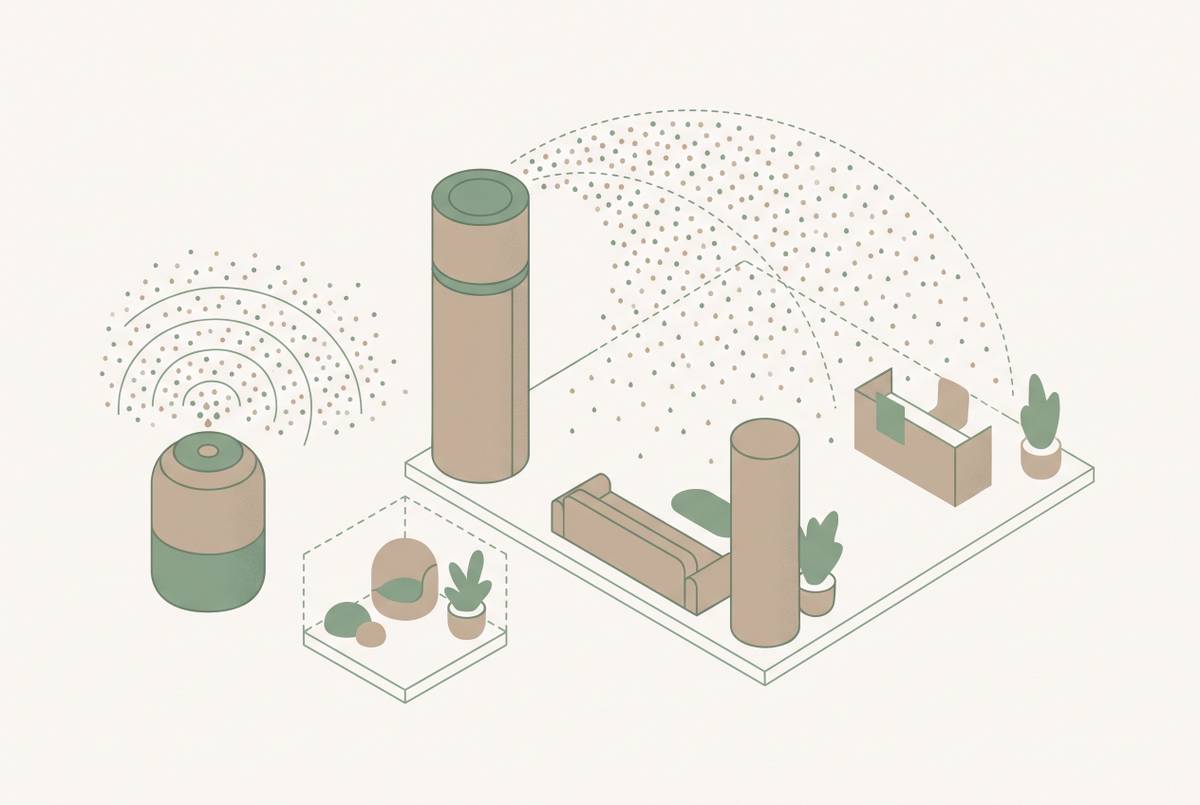
Cold-air diffusion uses compressed air to atomize fragrance oil into an ultra-fine dry mist. The particles are light enough to stay in the air and move with the room’s natural airflow. Distribution is the essential difference. The aim is to control the level of fragrance across the space where people are and avoid a strong patch of scent beside the device. That mechanism explains why the technology translates from a hotel setting to a suitably sized home diffuser.
The process uses neither heat nor water. Without heating, it avoids changing the fragrance through the faster loss of volatile top notes, preserving the intended relationship between top, middle, and base notes. Without water, it avoids diluting the oil or adding humidity to the room. It also removes the standing-water reservoir that needs attention in a water-based device. These are distinct advantages, but they serve one purpose, which is to reduce variables between the formulated fragrance and the scent experienced in the room.
Heat-based diffusers can change the profile over time as volatile notes are lost more quickly. Ultrasonic diffusers dilute oil in water, add humidity, and require regular reservoir cleaning to prevent mold and bacterial growth. Sprays create a more immediate contrast, with an intense opening followed by a decline. A burst is not a background.
Does this process alone give a home the same scent as a hotel? No, because airflow, coverage, oil formulation, and output settings still shape the experience. Cold-air diffusion provides the means for controlled, even delivery rather than making every installation automatically consistent. Its advantage is that the home user can work with the same essential process hotels use, then calibrate it to a smaller space. The physics travels well, but the settings must change with the room.
What note profiles the most recognizable hotel scents are built on, and why they travel well into a home
Recognizable hotel fragrances tend to balance an accessible opening with a persistent foundation. Tea and citrus profiles can smell fresh without giving the scent too strong a character, while woods, amber, and musk make it warm and help it last. This balance explains why a hotel-inspired fragrance can feel appropriate at home without turning the living room into a lobby.
Westin’s White Tea scent is a familiar reference for the clean, restrained end of this spectrum. White tea, bergamot, and green tea profiles offer freshness and broad appeal, signaling cleanliness and sophistication without demanding attention. Citrus-forward openings do much the same with notes such as bergamot, lemon blossom, and grapefruit. Air Aroma describes The Lana Dubai’s signature through bergamot, jasmine, and sea salt, positioned as a counterpoint to heavier regional scents.
Warmer compositions build their effect differently, using sandalwood, amber, and musk to create an enveloping sense of arrival. Their persistent base gives the fragrance continuity after its brighter opening has receded. Bolder combinations involving oud, amber, saffron, and leather make a more assertive statement. At home, those profiles need a lower diffusion level.
For home placement, the lesson is to match the family to the space’s use. Clean tea and citrus profiles suit kitchens, entryways, and workspaces, while sandalwood, musk, and soft floral compositions suit bedrooms. Warmer amber and wood fragrances suit rooms where people live and entertain. Maison 21G identifies climate, airflow, and room size as variables in scent perception, so these pairings are starting points. The same oil needs different calibration in an open-plan living room and a bedroom.
How do you make your home smell like a five-star hotel using a diffuser?
Begin with one signature fragrance suited to the dominant use and mood of the space. Staying with that choice lets the scent become associated with the home rather than changing its identity each time the diffuser runs. This does not require the boldest or most elaborate composition. The hotel principle favors a fragrance that can remain comfortably in the background. A rotating roster of oils may offer variety, but it works against the continuity this particular setup is meant to create.
For the hardware, evaluate coverage before decorative features. The diffuser’s square footage rating should match or slightly exceed the actual area of the room. A unit that is underpowered for an open-plan space will struggle to establish a detectable presence, while excessive output in a small room produces the opposite problem. Independent control of mist output and scheduling is the next useful criterion.
Choose a central position, a location near an HVAC return, or another point where air circulates naturally. A position tucked into a corner against a wall can concentrate the scent in one zone, undermining the reason for choosing the technology.
Start at a low intensity and assess the result over several hours rather than turning the diffuser to maximum on first use. Use scheduling to give the diffuser breaks, limit nose fatigue, and use less oil while keeping the scent in the background. Before giving up on a scent that suits the room but smells too strong, check how much the diffuser puts out.
Choose clean, transparently formulated oils without harsh solvents or undisclosed allergens, because cold-air diffusion preserves the formulation. A poor formula remains a poor formula. For a household with pets or family members, the absence of heat, standing water, and aerosol propellant removes those particular sources of risk, but it is not a blanket safety guarantee for every fragrance. The oil’s formulation remains a separate consideration from the machine’s mechanism.
Finally, regular cleaning sustains the settings established at the start. Fragrance residue can accumulate in the atomizer and affect output over time. It can also contaminate a replacement oil with traces of the previous one. A calibrated device cannot keep delivering predictably if residue changes how it performs.
Why the signature scent approach produces a fundamentally different result than accumulating fragrance products
Accumulating candles, sprays, plugins, and diffuser oils creates more scent sources, but not necessarily a recognizable scent identity. When those sources compete or change frequently, the home offers a shifting impression. More fragrance is not more coherence. The signature approach instead assigns one fragrance a defined role and uses the diffuser to sustain it at an appropriate level.
That distinction also clarifies what memory can and cannot do. The Proust phenomenon involves re-encountering a scent linked to an emotionally significant experience. Consistent use can nevertheless support a clear association between a place and its fragrance. Passalacqua sells its signature fragrance through its Sense of Lake boutique, in person and online, reflecting the desire to take a property’s sensory identity home.
For a homeowner, the practical shift is from collecting products to maintaining a considered setup. The diffuser is the hardware investment, while oil is the recurring expense that scheduling helps extend. Its value comes from repeated use. That also makes a well-chosen diffuser a defensible home-fragrance gift, offering a daily-use experience. The five-star standard is restraint made repeatable, with enough scent to give the home an identity and enough control to let the home remain itself.