Cold-Air Diffuser Maintenance Schedule for Consistent Performance
Regular cleaning prevents oil buildup that degrades scent quality and performance.
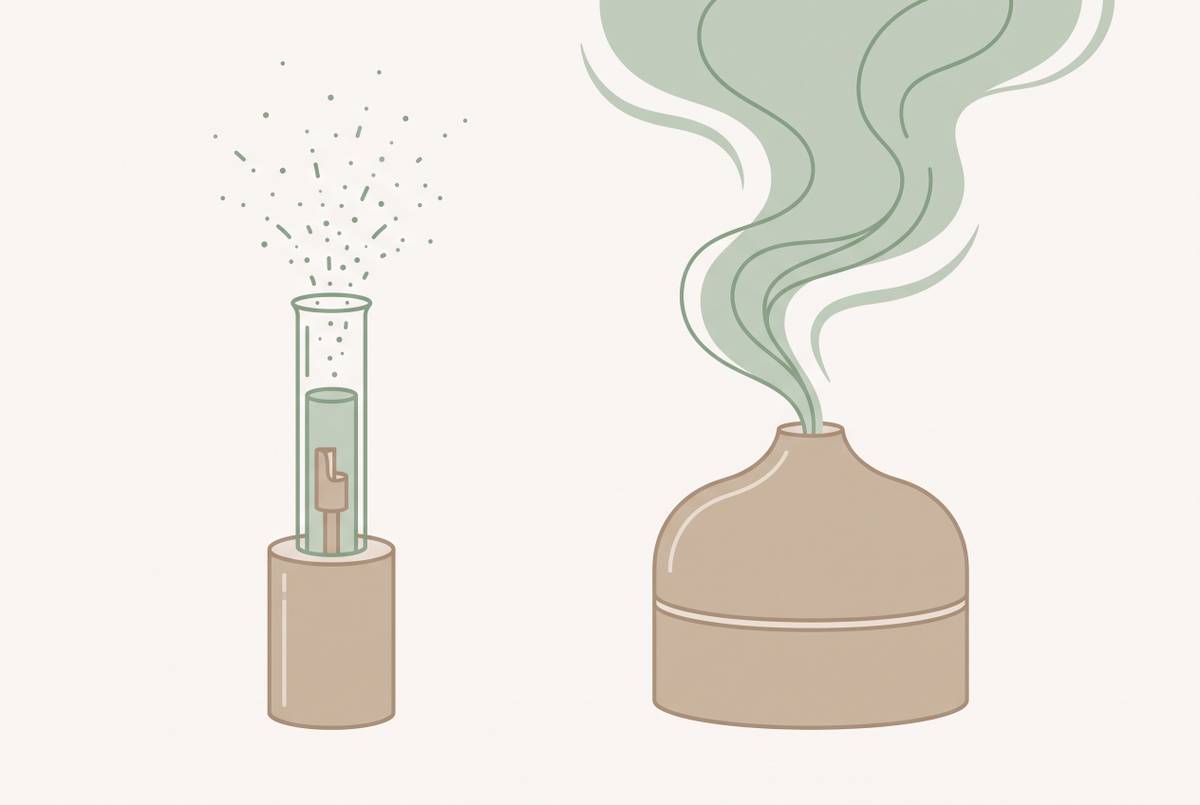
A cold-air diffuser holds its performance only as long as somebody treats cleaning as scheduled work rather than an emergency response, and the mechanism explains why waiting for a problem is the wrong approach. These units work by pushing pressurized air through pure fragrance oil, atomizing it into a dry micro-mist without heat, without water, and without any dilution step to soften what's happening mechanically. That dryness is the whole selling point, and it's also the trap. Because the oil path stays compact and dry rather than sloshing around in a reservoir, residue doesn't announce itself the way a cloudy water tank might. It just accumulates, millimeter by millimeter, while the housing outside looks exactly as clean as the day it arrived.
That mismatch between appearance and internal condition is why a fixed schedule catches problems that a visual inspection misses. According to guidance from AromaTech, an uncleaned diffuser becomes congested with built-up oils over time, and the result is weaker scent throw or a fragrance that comes out smelling faintly off, almost fermented. A coffee maker starts producing coffee with a strange aftertaste long before anyone thinks to run vinegar through it. Nobody blames the beans first. They blame the machine, usually after several cups have already gone slightly wrong. A diffuser works the same way, quietly compounding a small chemical residue problem until the scent itself becomes the symptom.
Left unaddressed long enough, that congestion doesn't plateau. It can escalate to the point where the unit stops working altogether and needs replacing, which reframes the entire maintenance conversation. It's insurance against paying for a new machine.
Cold-air units do carry a real structural advantage over ultrasonic diffusers here: no water tank means no standing reservoir, no humidity buildup, and none of the mold risk that comes with ultrasonic misting systems. But that advantage covers exactly one failure mode, not all of them. Simplicity in the water department doesn't mean the oil path gets a free pass. Residue in the nebulizing path is still a real, measurable failure mode, and it's the one this entire piece is about.
What builds up inside a cold-air diffuser
Four points along the nebulizing path are where residue actually accumulates: the oil bottle itself, the atomizer head, the nozzle tip, and the bottle bay seal. That's a useful map to carry into any cleaning session, because it means cleaning the diffuser is a specific procedure with defined stops, not a vague gesture with a damp cloth. It's a checklist with four specific stops.
The residue in question is dried or thickened fragrance oil, not mineral scale and not water deposits. That distinction matters practically: it's alcohol-soluble residue, not water-soluble, which is exactly why the choice of cleaning agent later in this piece isn't a minor detail so much as the whole game.
Of the four points, the nozzle tip takes the most punishment. A dried oil film there has a direct, almost linear relationship with atomization efficiency: less clear opening, less scent throw, no ambiguity about cause and effect. The bottle bay and its rubber seal fail more quietly. Oil film building up on that seal weakens the airtight connection the entire pressure mechanism depends on, and because pressure loss doesn't always announce itself the way a visibly clogged nozzle does, this failure mode tends to go unnoticed for longer even though it's doing comparable damage.
The exterior isn't blameless either. Dust settling on top of the machine and oil building up around the top opening can interfere with the mist dispersion path, according to guidance from Hotel Collection. It's easy to assume the exterior is cosmetic. It is, partly, an aesthetic matter too, but the exterior condition also reflects internal buildup.
Then there's a source of degradation that's easy to overlook entirely: switching scents. Residual oil left behind from a previous fragrance blends with whatever gets loaded in next, and the result is an unintended hybrid smell that wasn't the goal of either bottle. Hotel Collection specifically recommends cleaning between fragrance changes for this reason, and it's a distinct category from the monthly deep clean, worth thinking about separately.
No water means no standing reservoir, which means no bacteria and no mold colonizing a wet chamber the way it can in an ultrasonic unit. The residue problem here is oil-only. That's simpler to solve than a biological growth problem, even if it still takes real diligence to stay ahead of it.
The core cleaning schedule: daily, monthly, and scent-switching tasks
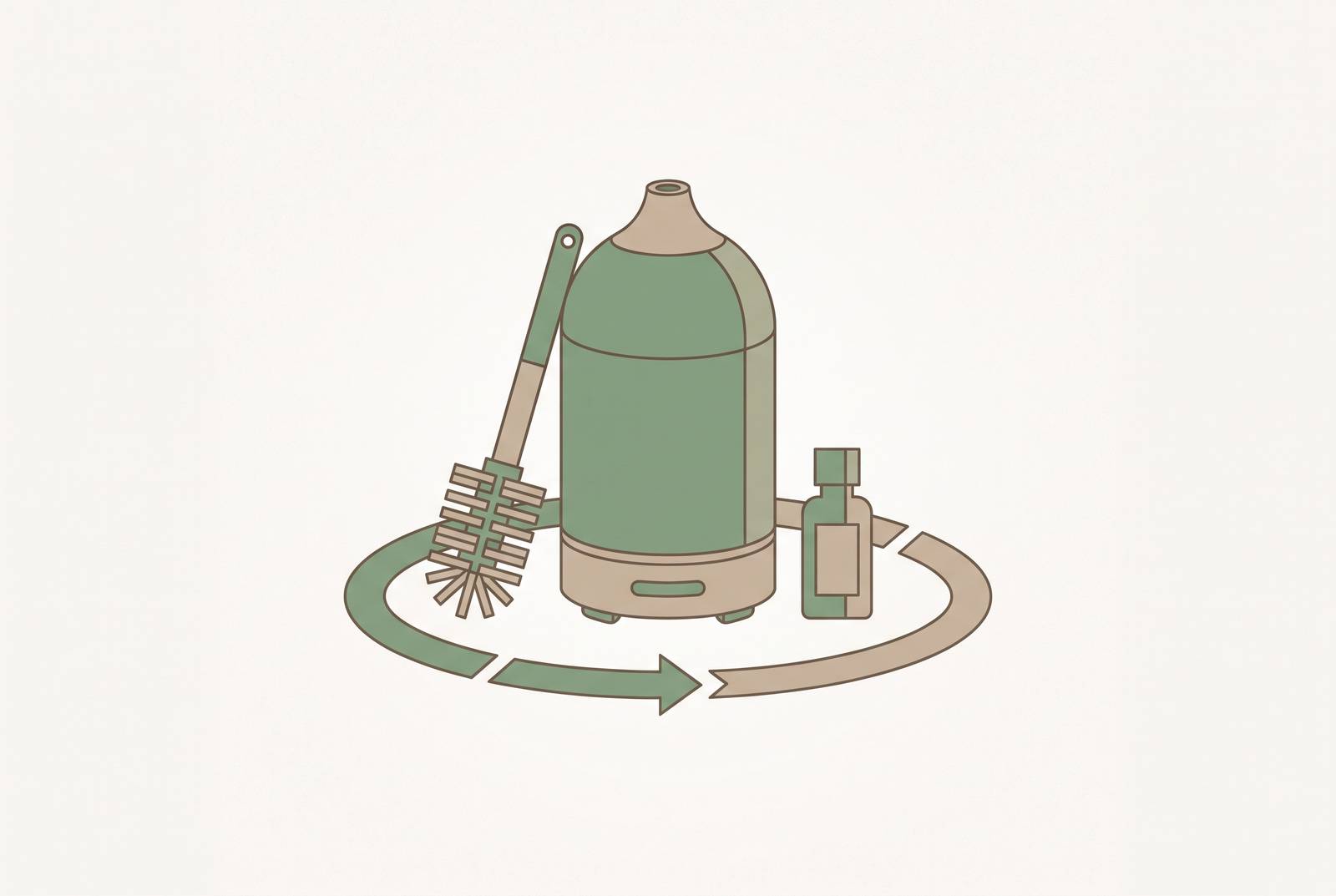
Rather than thinking purely in calendar terms, it helps to organize the schedule around three separate triggers: time, performance, and events. Each one governs a different kind of decision.
The time-based trigger is the baseline. Hotel Collection recommends a monthly deep clean, every one to two months, and AromaTech's guidance is similar: every two months, or whenever the oil gets changed, whichever comes first. The performance-based trigger overrides the calendar whenever scent output drops noticeably, the mist turns visible or starts to sputter, or an oily film shows up on nearby surfaces. Those are diagnostic signals, not cosmetic complaints, and they mean clean now regardless of what the calendar says. The event-based trigger is simpler still: switch fragrance oils, clean the unit, every time, to prevent scents from blending into each other as described above.
Daily maintenance, meanwhile, is almost embarrassingly light, which is the whole point of the cold-air design. Most days require nothing beyond confirming the bottle sits seated correctly and the housing is closed, plus a quick wipe if any drips occurred during the last session.
The monthly deep clean is where the actual work happens, and it's worth walking through in order. Unplug the unit and give the motor a moment to cool, laying a soft cloth underneath to catch drips. Remove the oil bottle carefully, tilting it over a waste bin to drain rather than shaking it, since shaking creates stray mist nobody wants floating around a kitchen counter. Before anything comes apart further, take a photo of the bottle and nozzle arrangement, a small step Aromadd recommends specifically because parts need to go back exactly where they came from.
From there, clean the bottle bay walls and the rubber seal using a cotton swab dipped in whatever solution the model's manual specifies, typically 99% isopropyl alcohol according to Mila Marie Scents. The seal should end up looking glossy, not gritty, which is a genuinely useful visual test anyone can run without special tools. Clean the nozzle tip with a soft brush, and for oil that's dried on stubbornly, a brief low-setting run with alcohol flushes the residue through, with Mila Marie Scents recommending roughly ten seconds.
Once that's done, remove the cleaning solution and let every part air dry completely before refilling. Power should never reconnect to wet components, full stop. Finish by dusting the exterior housing and the top opening with a dry microfiber cloth, closing the loop on the dust-and-dispersion issue raised earlier.
One caveat from Aromadd deserves its own sentence rather than a footnote: never run cleaning liquid through a unit unless the official instructions for that specific model explicitly allow it, because atomizer heads, bottles, tubing, and seals vary enough between models that a generic protocol can misfire. Confirm against the manual first, every time.
Between-scent cleaning follows a shorter version of the same logic: drain the remaining oil, run a brief alcohol flush, let everything air dry, then install the new bottle. That sequence is also a natural moment to inspect the bottle itself for cracks or wear, since a cracked bottle leaking onto internal surfaces creates a mess well beyond what any scheduled clean is meant to solve.
Aromadd also suggests something almost administrative: log the cleaning date and note any change in performance. It sounds unglamorous, maybe even a little bureaucratic for a home fragrance device. But that log becomes the reference point for figuring out whether an interval needs shortening, which affects how quickly a problem is caught before performance noticeably drops.
Choosing the right cleaning agent
Isopropyl alcohol is the dominant agent for most nebulizing diffusers, and there's a clear mechanical reason why. It dissolves solidified oil residue without leaving behind any water-based deposit of its own, which matters because the whole point of cold-air diffusion is staying dry. Mila Marie Scents specifies 99% concentration for bay and nozzle work specifically, and some brands, AromaTech among them, offer a proprietary diffuser cleaner while still permitting isopropyl alcohol as an acceptable substitute.
Why alcohol rather than water, when water seems like the more obvious cleaning agent for almost everything else in a household? Because introducing water into a system built to stay dry risks leaving moisture inside the atomizer or tubing, which can interfere with the pressure-based diffusion mechanism and, in humid conditions, invite microbial growth in parts that have never had to deal with it before. The whole cold-air advantage over ultrasonic units evaporates the moment water gets introduced somewhere it doesn't belong.
What to avoid carries just as much weight as what to use. Abrasive cleaners damage interior materials. Dish soap and household detergents leave surfactant residue that alters the next fragrance and can clog the nozzle on top of that. Unapproved solvents can degrade rubber seals and plastic components in ways that aren't obvious immediately. And really, anything not listed in the specific model's manual falls into the same risk category, regardless of how reasonable it seems on paper.
Model-specificity is the underlying principle tying all of this together, more than any single universal rule about which chemical works best. Different atomizer heads, tubing materials, and seal compounds respond differently to solvents, and Aromadd's guidance lists using an unapproved cleaner as its Mistake #1 for exactly this reason. Where a manufacturer offers a proprietary cleaning solution, that product was formulated for that unit's specific materials, and using it carries less risk than substituting something that seems chemically similar on the label. Chemically similar isn't the same as tested for this exact seal compound, and that gap is where damage tends to happen.
The post-clean test run as a performance diagnostic
Reassembly isn't the finish line. Plug the unit back in, select the lowest intensity setting, and let it run for five minutes. What comes out during that window functions as a diagnostic report on how well the clean actually went.
A passing result looks specific: a consistent, invisible dry mist, even scent dispersion across the room, no sputtering, and no oily film settling on any surface within reach of the output. Anything short of that is worth reading carefully rather than shrugging off.
Visible or wet-looking mist means atomization isn't complete, and residue is probably still sitting in the nozzle. Sputtering or intermittent output points to a partial blockage, which means repeating the nozzle cleaning step before running the unit any further. A faint oil film on nearby surfaces suggests under-atomization, droplets too large to stay airborne, which can come from placement too close to a surface or from a clog that wasn't fully cleared, and the right response is to stop the unit rather than let it keep running. And if the scent itself smells subtly off despite a fresh bottle, that's ghost residue from the previous fragrance that didn't get fully flushed, calling for a second alcohol cycle before moving on.
Aromadd's own guidance draws a firm line here: if scent output stays reduced even after an approved cleaning method, the right move is to stop using the unit and contact support rather than repeating an unlisted cleaning cycle, because repeated unapproved attempts become their own damage risk. Persistence isn't always the virtue it looks like.
The test run doubles as a calibration moment, too. A freshly cleaned atomizer disperses oil more efficiently than one coated in residue, so intensity settings that felt right last month might need dialing back slightly now that the nozzle is actually clear.
Common maintenance mistakes that quietly shorten a diffuser's lifespan
Most of the damage described in this piece traces back to a short list of habits, and the first is simply waiting until performance visibly fails before acting. Residue builds gradually, which means by the time output drops enough to notice, the atomizer has already been fighting accumulation for weeks. The entire schedule exists to intervene before that point, not after.
Cleaning only the exterior is mistake two, and it's an easy one to fall into because the exterior is what's visible. The device can look spotless while the actual problem sits untouched in the bottle bay, the nozzle tip, and the atomizer path. Wiping the housing does nothing for scent output, however satisfying it feels.
Skipping the fragrance-switch clean is mistake three, and it produces a specific, avoidable outcome: residual oil from one scent mixing with a new fragrance, creating a blend that satisfies nobody. Hotel Collection flags this explicitly as a reason to clean between every single change.
Using an unapproved cleaning agent remains the single highest-risk error on this list, and the damage from the wrong solvent appears in seals and internal materials that degrade over time. Seals and internal materials degrade over time, which makes this mistake easy to miss until a unit that seemed fine for months suddenly isn't.
Reassembling parts before they're fully dry is not what mistake five describes; mistake five is cleaning the nozzle tip with a soft brush, with Mila Marie Scents recommending a brief 10-second low-setting alcohol flush for stubborn dried oil. Any leftover cleaning solution in the atomizer path affects the first diffusion cycle, and if that solution is alcohol-based, running the unit before it evaporates can damage components outright. Aromadd requires complete drying, every time, before power goes back on.
Over-tightening the bottle sounds minor and isn't. AromaTech's own protocol flags it directly: the bottle should sit snug and straight, never forced, because cross-threading or overtightening causes diffusion problems. And environmental neglect rounds out the list. Direct strong sunlight or extreme cold can damage internal components and the motor over time, which means placement is a longevity decision about where a device is positioned relative to heat and cold sources.
Using smart scheduling features to reduce oil waste and extend cleaning intervals
Smart diffusers paired with companion apps let owners set defined on and off windows so the unit runs only when people are actually in the room, rather than misting into empty air on a fixed timer. That single feature changes the maintenance math in a fairly direct way.
Mila Marie Scents notes that a 200 ml bottle in a well-scheduled PULSE smart diffuser can run up to 30 days, with scheduling discipline directly extending oil life and reducing the frequency of refills that create cleaning opportunities for grime to enter Cold Air Diffuser Maintenance & Refill Guide – Mila Marie Scents. Lower intensity settings during lighter-use stretches do something similar: less oil moving through the nozzle per session means slower residue accumulation, and the unit runs more efficiently at a moderate output than it does maxed out around the clock.
This is where the maintenance schedule stops being generic. Knowing exactly when a diffuser runs, and for how long each day, lets an owner calculate a cleaning interval that fits actual use rather than defaulting to "every one to two months" as a one-size answer. Heavy daily use pulls the interval toward the shorter end of that range; occasional, intermittent use can stretch it longer. App-based scheduling makes it simple to fold a cleaning reminder into the same recurring calendar that already governs fragrance timing, and after a clean and test run, resetting the schedule to reflect any intensity changes closes the loop cleanly.
How oil quality affects residue buildup speed
Not every fragrance oil behaves the same way once it hits a nebulizer, and this is where a lot of unnecessary cleaning gets created before a diffuser ever turns on. Oils formulated for ultrasonic, water-based diffusers carry dilution carriers designed for a completely different mechanism, and running them through a cold-air unit leaves a different, often heavier residue profile behind. Wrong oil, faster buildup, shorter interval between cleans. It's a straightforward chain of cause and effect once it's laid out.
What to actually look for on a label: oils marketed specifically for cold-air or waterless diffusion, undiluted fragrance oils rather than pre-mixed blends, and a clear top-heart-base structure so the scent develops and shifts across a session instead of flattening out within minutes, per guidance from Mila Marie Scents. What to avoid is just as specific: any label pointing toward "add to water" or "for ultrasonic diffusers" signals a formulation built for a different mechanism entirely, one that will underperform and clog faster in a cold-air unit.
Clean, transparent formulations matter here too, phthalate-free with fully disclosed ingredient lists, and not purely for health reasons. Proprietary blends hiding undisclosed synthetic fixatives tend to leave heavier residue in the atomizer, while cleaner formulations generally atomize more completely and leave less behind to scrub off later. For households with pets, this selection step carries an added layer: checking that a given oil excludes compounds known to be harmful to cats and dogs, tea tree oil and certain eucalyptus varieties among them. That's a decision made before the oil ever goes into the bottle, not a maintenance step in the strict sense, but it belongs in the same conversation, since the wrong oil choice creates work for every section that came before this one.