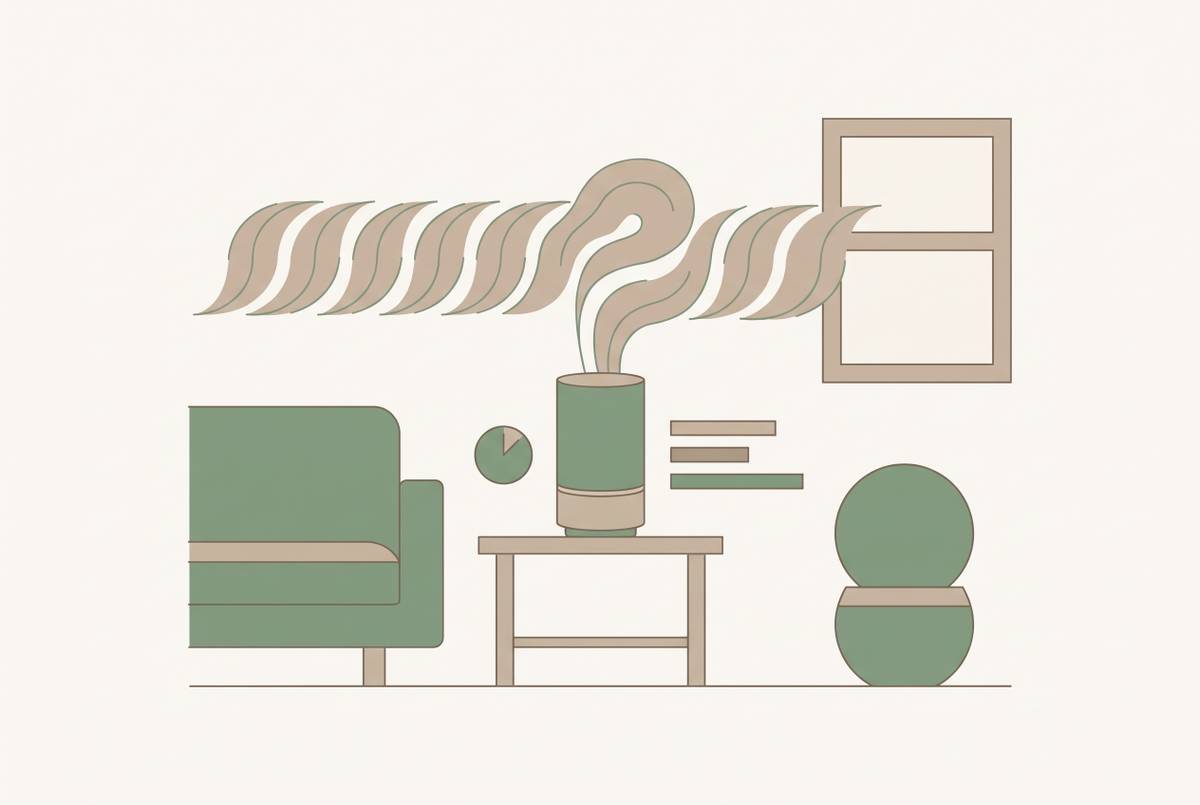
Cold-Air Diffusion Technology and the Square-Footage Gap Between Home Units and Hotel Lobbies
Matching diffuser size and placement to room layout closes the gap between hotel lobbies and home.
Recreating a luxury hotel scent experience at home requires pairing a hotel-inspired fragrance with cold-air diffusion matched to the space. Hotels and home units use the same underlying technology, but scent fills a room with sufficient output and air distribution and stays near the device when either is inadequate. Closing that gap means matching hardware, placement, oil, scheduling, and maintenance to the area being scented.
Why hotel lobbies smell the way they do — and why your diffuser probably doesn't
A luxury hotel lobby often feels composed before a guest can explain why. Fragrance feels like part of the room. That immediate emotional impression is the “Lobby Effect.” Hotels create it on purpose through olfactory branding, using fragrance to shape mood and memory as part of the room’s design instead of spraying it only when something smells stale.
Scent works through the limbic system, the part of the brain tied to emotion and memory. This gives a signature fragrance a role beyond making the air pleasant, helping guests associate a feeling with a property and recall it later. Westin’s white tea scent is a textbook example. It functions much like a logo, only without requiring anyone to look up.
At home, fragrance often enters the picture reactively, after a room has become stale. Fragrance introduced this way feels like a noticeable intervention and leaves the room without a settled atmosphere. A strong first impression then fades, or one scented corner remains separate from the rest of the room. Delivery begins to explain the difference even when the fragrance chosen stays the same.
How cold-air nebulizing diffusion actually works — and why the absence of heat and water matters
Cold-air nebulizing diffusion uses pressurized air to atomize pure fragrance oil into ultra-fine, dry particles. This micro-mist remains suspended in the air, taking time to settle on surfaces. No water vapor is needed to transport it. Because the process neither heats nor dilutes the oil, it preserves the fragrance’s complete scent profile while distributing it through the space.
The absence of heat protects delicate, volatile top notes that would otherwise evaporate first and fastest. Heated diffusers and candle warmers change the fragrance’s character as those notes disappear. Cold-air diffusion avoids that alteration at the source. The absence of water also means the device adds no humidity and has no water tank for a child or pet to overturn.
Ultrasonic units mix oil with water on a vibrating plate, diluting the fragrance and limiting consistent coverage to a small room. Reed diffusers use passive capillary action and work better on a bathroom counter than in an open living area. Aerosol sprays deliver a burst, then fade away. These methods can provide local or temporary fragrance, but they do not offer the same sustained, dry dispersion.
The square-footage gap — why the same technology performs differently in a hotel lobby and a home room
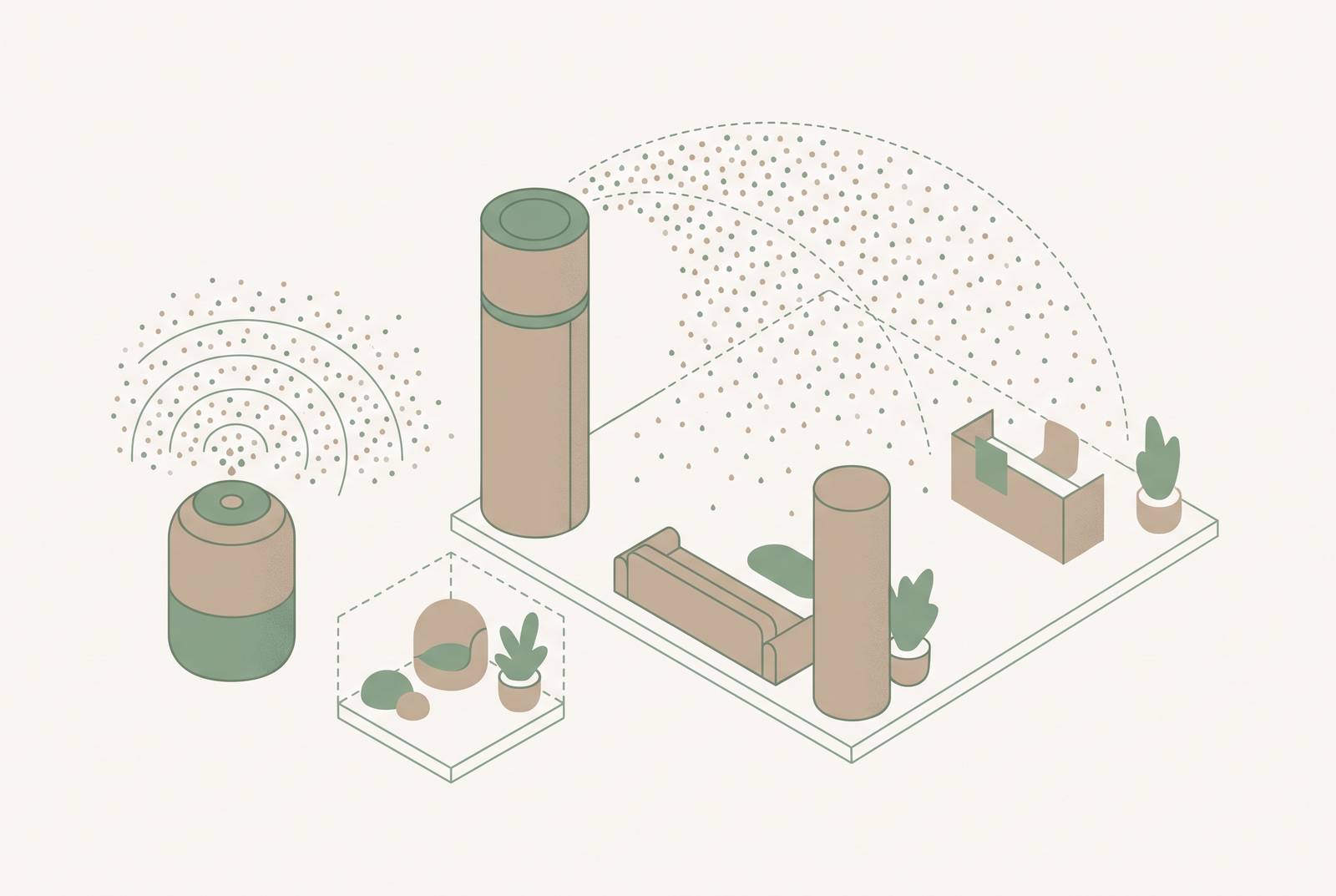
Hotel lobbies commonly use HVAC-integrated cold-air systems that introduce fragrance into the building’s existing ductwork. Scent arrives with conditioned air across thousands of square feet, without an obvious source in the room. A standalone home device usually scents one zone. The atomizing principle may be identical, but the distribution system and output operate at different scales.
A device made for one open-plan living area may struggle to scent every room on a floor from one fixed spot. Walls and doors split the space into separate zones. Closing the gap requires greater output, several appropriately placed devices, or integration with the home’s HVAC ductwork.
Coverage ratings also need a practical allowance. A useful working rule is to halve a manufacturer’s advertised coverage when estimating consistent performance in a furnished home. This is an approximate planning principle. High ceilings add air volume, open windows and doors let scented air escape, furniture interrupts airflow, and HVAC circulation may move air away from the device’s output.
Cold-air diffusion works at home when the chosen system serves the actual space. One unit can be appropriate for a large bedroom, home office, or open main living area without being suitable for the rooms beyond it. Square footage describes the floor, but airflow determines how effectively fragrance travels above it.
How to read a diffuser's specifications and translate them into room-by-room decisions
For a homeowner evaluating a purchase, the starting point is the specific zone the device will serve. Measure that open area rather than the whole home, then apply the halving principle to advertised coverage. Next, consider the room’s shape and use. An open-concept space that reaches into the next area has more space to scent, and fragrance escapes when doors open often.
A powerful unit running at low intensity in a small room is not automatically a well-matched choice, just as a compact device cannot fill a large space merely by running longer. The specification should fit the intended zone. Scheduling and adjustable intensity then help manage concentration within that fit, rather than compensating for a fundamentally unsuitable scale.
Placement is part of that decision. Placing the device at counter height or mounting it on a wall helps the micro-mist stay in the air, while a spot in a central airflow path or near an air return helps it spread. Corners and furniture can obstruct that movement. Before introducing fragrance, clean HVAC filters and address odor sources such as carpets and heavy drapes so the new scent does not compete with stale air.
Scheduling controls how the fragrance feels over time. Nose blindness means occupants may stop noticing a constant scent even while visitors find it overpowering. Short on-periods followed by longer off-periods help keep scent in the background without letting too much build up. Time-of-day scheduling can align lighter scents with mornings and calmer profiles with evenings, with no diffusion during sleeping hours in rooms with pets. App control makes intensity and timing easier to adjust when occupancy changes.
What diffuser can fill a large room like a hotel lobby — and when does a home need HVAC integration?
For a single room or small zone, compact cold-air plug-in units are the first tier to consider. These units suit spaces up to roughly 600 sq ft, though advertised coverage can differ from how much space they scent in a home. They work well in bedrooms, offices, powder rooms, and entryways. Compact cold-air plug-in units differ from hardware intended to serve an entire floor because of their lower output, quieter operation, and lack of installation requirements.
An open-plan main living area needs the next tier, usually a mid-range standalone unit that has higher output and app-controlled scheduling. This is the common route to a hotel-like result in the home’s main gathering space. Larger layouts may need hardware made for commercial spaces and adapted for homes. Across cold-air waterless diffusers, real-world coverage spans 500 to 5,500 sq ft, with higher-output standalone and HVAC-optional units at the upper end.
For whole-home distribution, HVAC integration changes the delivery route rather than simply increasing the intensity in one room. A diffuser connects at the air handler with a hose and bracket, using existing ductwork without structural changes. The fan must run to distribute the fragrance. When it is off, scent distribution stops unless the fan operates in continuous circulation mode, making fan behavior part of the scenting plan.
A home does not have to take that route. A mid-tier device in the main living space and a smaller unit in a bedroom or office can cover separate zones without HVAC installation. Zoning also allows each room to have a different fragrance. The trade-off is more reservoirs to refill and atomizers to clean, with manual scheduling coordination unless each device has independent app control.
Why fragrance oil selection determines whether matched hardware actually delivers
Correctly matched hardware cannot make a diluted or unsuitable oil perform like a commercial-grade fragrance blend. Hotels use concentrations formulated to project across large volumes of air. Oil is half the system. A bottle labeled with the same notes as a hotel scent may therefore deliver a different result.
Top notes such as citrus and light florals create the first impression and fade fastest. Heart notes including jasmine, white tea, and rose form the body of the scent. Base notes such as oud, cedarwood, musk, and amber provide lasting depth, shaping what the room smells like after the device cycles off.
For household selection, fragrance can follow room purpose and season. An entryway or main living area benefits from a recognizable signature, while a bedroom suits a calmer, less assertive profile. Seasonal rotation offers another useful distinction. Citrus, white tea, ocean, and tropical blends suit a lighter spring or summer atmosphere, while amber, sandalwood, oud, vanilla, and warm musk reinforce warmth in fall and winter.
Formulation also requires scrutiny, especially around children and pets. The International Fragrance Association (IFRA) sets standards for fragrance formulations, so following those standards and clearly listing ingredients help make an oil a good choice. Neither vegan nor cruelty-free labeling guarantees safety for every occupant. Cats lack a liver enzyme needed to process many essential oil compounds, and no universal “pet-safe essential oil certification” exists. Heat-free operation avoids burned-oil compounds, but it does not make every oil safe.
Routine maintenance as the variable that determines whether a diffuser continues to perform like a hotel system or quietly degrades
A well-chosen system can lose performance without any change in the room. Fragrance residue accumulates in the atomizer and nozzle, restricting output and changing the mist’s behavior. The device may run while delivering less fragrance. That decline can look like inadequate power when the actual problem is an increasingly obstructed atomizer.
Residue also changes scent accuracy when one fragrance contaminates the next. A light citrus blend can smell muddied by the remains of a heavy oud-and-musk oil. More output will not correct that problem. Hotels care for their systems on professional schedules, while how often a home device needs cleaning depends on use, with frequent, high-intensity use needing more care than occasional low-intensity cycles.
For routine care, run a cleaning cycle with isopropyl alcohol or a manufacturer-recommended cleaning solution, following the device’s instructions. Wipe the reservoir and external surfaces, then let them dry fully before refilling. Clean between fragrance families as well as on schedule. HVAC-connected devices still need the same atomizer care, including cleaning at the connection point and nozzle, even though they connect to the ductwork.
Cleaning also protects the economics of the setup. A clogged atomizer can use more oil for the amount of fragrance it gives off, which raises the cost even as cycles run on schedule. Consistent care keeps consumption and performance more predictable. Once the device fits the space, its placement supports airflow, and the oil suits the household, maintenance preserves the hotel-to-home gap already closed by those decisions.
Putting the framework together — the decisions that close the hotel-to-home gap
The next step is to define what “a house that smells like a hotel” means for the particular home. If the goal is a consistent arrival impression and a well-scented main living area, the task is narrower than distributing one fragrance through every room. Start with that distinction and measure the intended zone. That choice guides whether to compare standalone units, plan several zones, or look at an HVAC-connected system.
A suitable purchase needs a workable position, an appropriate oil, adjustable scheduling, and a cleaning routine the household can maintain. Intervals and restrained intensity aim for an atmosphere that belongs to the room, rather than one that announces the machinery behind it.
For whole-home coverage closest to the hotel approach, HVAC integration provides the relevant distribution method. Choosing which area to scent first comes next. Measure it, allow for real conditions, and select the hardware tier that fits before choosing the fragrance.