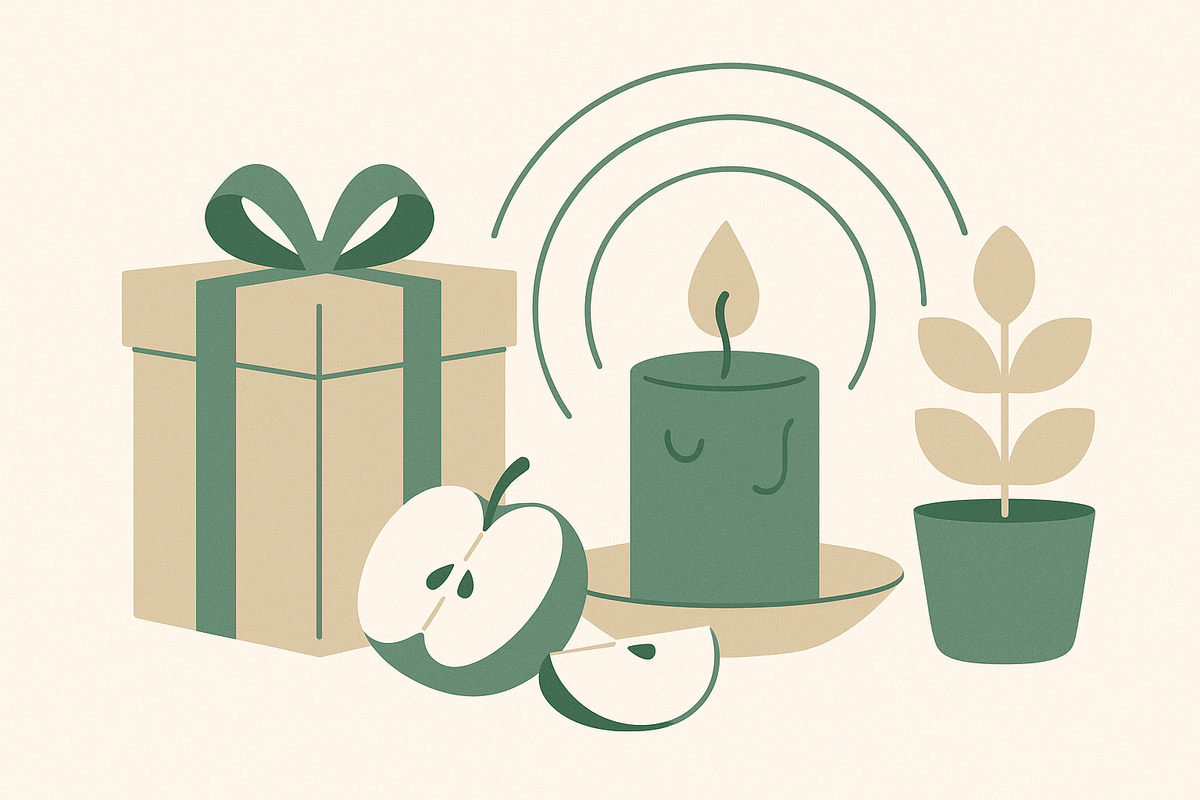
Housewarming Gift Etiquette and Spending Norms
The right gift celebrates the milestone without imposing taste on the new homeowners.
A housewarming gift exists to bless a household, not to settle a debt or prove good taste, and that single fact decides almost everything else in this piece. Etiquette authorities treat it the same way they treat a hostess gift: a small thank-you for being let into someone's home, nothing more transactional than that. Emily Post calls a housewarming gift lovely but not required, which settles the matter of obligation before it starts. Bringing one is the norm. Demanding one is not, and Post is specific on this point too: hosts shouldn't set up a registry or post a wish list, though if a guest asks what the new owners might like, it's fine to name a few things.
Bread, salt, and the gifts themselves reveal that the gesture itself was always the point. Bread, so the home never knows hunger. Salt, so life always has flavor. Nobody handed over a loaf expecting it to furnish the kitchen; the gesture was the point, not the grocery value. That origin story rules out an entire category of modern gift before anyone even walks into a store: nothing too large, nothing too personal, nothing that turns into a burden the moment it's unwrapped.
So the frame is set. A housewarming gift should be thoughtful and useful, two words that sound simple until you're standing in a store aisle trying to figure out what they mean for a specific person's specific kitchen. Thoughtful without being presumptuous. Useful without being forgettable. The rest of this piece is really just an argument about how to hit both targets at once, starting with the question everyone actually opens their search engine for: how much should this cost?
How much to spend, calibrated by relationship
Money follows closeness, not square footage. A friend's modest rental and a cousin's sprawling first house get judged by the same logic: how close are you to the person, not how big is their mortgage. Multiple sources land on the same rough tiers, and the convergence itself is a useful signal that these numbers reflect actual norms.
For a coworker or acquaintance, $20 to $30 covers it, and it covers it well: a nice candle, one good glass, a small plant. Moving to a friend or neighbor opens the range to $25 to $50, enough for a serving board, a bottle of specialty olive oil, or a set of dish towels that look deliberately chosen. Close friends are in the $50 to $75 band, where a genuinely good kitchen tool, a throw blanket, or a plant in a proper ceramic pot starts to make sense. Close family tops out the scale at $50 to $100, covering a spice set, a Dutch oven, or a direct contribution to whatever fund the new homeowners are building.
A first home purchase carries more weight than someone's fourth apartment move, and gift amounts tend to drift toward the top of each band to match that. The event itself matters too: a casual apartment-warming with pizza boxes on the counter doesn't call for the same spend as a formal dinner in a couple's first house. None of this is a ceiling you're required to hit. The actual rule is simpler: a modest, well-chosen gift beats an expensive one that misses, every time, and nobody should spend past what's comfortable just to hit a bracket. If the budget feels tight for the tier a relationship suggests, pooling money with other guests is a completely normal way to give something bigger without any one person carrying the cost alone.
Timing, delivery, and the small etiquette details most people miss
Good timing is part of the gift, not separate from it. If there's a housewarming party and attendance is in the cards, bring the gift along rather than sending it ahead, and aim to arrive a few minutes after the stated start time so the host isn't still wiping down counters when the doorbell rings.
No party, or no way to attend? Send something within the first few weeks after move-in, once the new owners have unpacked enough boxes to actually enjoy what arrives. A gift that shows up a month or two late with a warm, specific note still lands better than no gift. Lateness is a minor stumble, not a disqualifying one.
Long-distance gifting adds a scheduling variable: time the delivery to land close to the party date, and for a virtual housewarming, get it there before the event so it can be opened on camera along with everything else. Tuck a gift receipt in with the box. Every retailer runs its own return window and policy, and a receipt means a duplicate candle or an oddly-sized serving board can be swapped without an awkward conversation. Finally, write something by hand, even two sentences. A note that mentions their garden plans or the kitchen they've been talking about for months does more work than "congrats on the new place," and costs nothing extra to include.
Why practical and consumable gifts consistently outperform decorative ones
The gifts that work are the ones that disappear. Not literally, but functionally, they get used up, worn out, or eaten, and then they're gone, taking any risk of a bad fit with them.
New homeowners are frequently what finance writers call house poor: the down payment and moving costs have eaten the savings account, and daily cash flow is tighter than it looks from the outside. A gift that saves money or makes daily life easier lands harder in that moment than a gift that just sits on a shelf looking nice. And decorative gifts carry real risk precisely because they don't disappear: wall art, bold ornaments, patterned throw pillows, all of it has to match someone else's taste in someone else's space, and that's a bet most gift-givers aren't positioned to win. Etiquette guides call out strong-opinion decor specifically as a category to avoid, for good reason.
There's a subtler trap hiding in anything that has to be displayed. A framed print or a statement vase puts the recipient in a bind: love it or not, it's now sitting on their mantel every time the giver visits, which turns a gift into a quiet obligation. Bulky single-use items cause a smaller but related problem, especially in apartments where closet space is already spoken for.
Consumables sidestep the entire mess. They get used, enjoyed, and used up, no storage dilemma, no decorating pressure, no taste mismatch lingering on a shelf for the next three years. Specialty food, a good bottle, coffee, something baked, a well-made candle, good hand soap, a low-maintenance plant: all of it clears the bar. And the instinct that consumables feel cheap doesn't hold up against the actual etiquette consensus, which favors something modest and genuinely useful over something large and flimsy. Quality and thoughtfulness carry the weight here, not size or permanence. Which raises the next question: among all the consumable categories available, is there one that does something the others can't?
Where home fragrance sits in the housewarming gift landscape
Home fragrance occupies an odd and useful spot on this list, because it checks the consumable box and adds something food, towels, and cutting boards can't offer: it changes how a room feels the moment someone walks into it. Etiquette guides already file diffusers next to candles and lamps under "ambiance" gifts, an established category.
One constraint governs the whole space: a strongly opinionated scent can read as a hint rather than a gift, so the safer play is a neutral, welcoming profile rather than whatever fragrance the giver personally loves. Soft woods, clean tea notes, bergamot, a touch of citrus, gentle musk: these are the notes borrowed from boutique hotel lobbies for a reason, built to feel elegant and calming to nearly anyone. That borrowed framing also hands the giver a built-in story. Instead of "I got you a diffuser," the pitch becomes "this is what a great hotel hallway smells like," which is a much easier sentence to write on a card.
There's a mechanism behind why this matters beyond mood lighting. Scent molecules travel a short, direct path to the olfactory bulb, which connects to the brain's limbic system, the same territory that handles emotion and memory. A well-chosen scent doesn't just decorate a room, it shapes how someone feels standing in it. That's the dividing line between fragrance and a dish towel: both are useful, but only one of them touches the emotional register of a new home. Which delivery method actually earns that effect is the next question, and that's where candles, reed diffusers, and cold-air diffusers start to look less interchangeable than they seem on a shelf.
Why a cold-air diffuser is a stronger gift
A cold-air diffuser wins the comparison on mechanism, not marketing. It atomizes fragrance oil into a dry micro-mist without heat or water. The scent spreads evenly through a room instead of pooling near a candle's flame or fading in and out as a reed diffuser slowly wicks up oil.
Heat is the quiet saboteur in a candle's fragrance throw. It breaks down molecular bonds in fragrance oils as they burn, which can shift the scent partway through a candle's life so it stops smelling like what was on the label. Cold atomization skips that step entirely, keeping the oil's molecular makeup intact so the scent in hour three matches the scent in minute one. The waterless design also closes off the mold, mineral buildup, and bacterial growth that can develop in water-based diffusers over time, a detail that matters more than it sounds for households managing allergies or asthma. No open flame means no worry about pets knocking it over, kids reaching for it, or a rental agreement with a no-candles clause buried in the fine print.
Pets deserve a specific callout here. Certain essential oils, including tea tree, eucalyptus, and several citrus varieties, are toxic to cats and dogs even when diffused rather than applied directly, so a gift-giver who knows a pet lives in the house has a real decision to make, not a cosmetic one. A waterless, cold-air format removes three hazards at once: hot water, steam, and aerosol spray, and it leaves behind no moisture buildup and no surface residue, though VOC emissions from any diffused oil remain something sensitive individuals should keep in mind regardless of the device. Pairing the diffuser with a clean fragrance oil that lists its full ingredient roster instead of hiding everything behind the word "fragrance" lets the recipient actually know what's circulating through their air.
Price is where this argument closes the loop back to the spending tiers from earlier. A premium cold-air diffuser with one curated fragrance oil runs roughly $50 to $100, putting it squarely inside the close-friend and close-family brackets, and personal-sized units start lower, nudging into friend-and-neighbor territory too. And unlike a candle that burns down to nothing in a few weeks, the diffuser is a one-time purchase. The recipient reorders fragrance oil on their own schedule after that, so the gift keeps working long after the thank-you note gets written, without turning into an ongoing obligation for whoever gave it.
Choosing the right diffuser and fragrance as a gift
Fit affects whether the diffuser actually works in the space it's given to, so matching it to the room matters more than matching it to a brand name. Room size is the first thing to consider: a diffuser built for a studio apartment will struggle in an open-plan house with twelve-foot ceilings, so it helps to know roughly what kind of space the gift is heading into before buying anything.
When the layout is a mystery, a mid-range diffuser sized for a standard living room is the safe default, strong enough to fill one room convincingly even if the rest of the house is bigger than expected. Fragrance choice should stay neutral on purpose: soft woods, clean tea, bergamot, white musk, a little citrus, the same family of notes discussed above. Skip anything heavily sweet, strongly floral, or loaded with spice. Those read as a personal preference being imposed on someone else's home, which edges right back into the "this feels like a hint" problem etiquette guides warn about.
If pets live in the house, confirm the fragrance oil skips tea tree, eucalyptus, peppermint, concentrated citrus, and ylang-ylang, since all of them carry documented toxicity risks for cats and dogs. It's also worth checking that the fragrance brand discloses its actual ingredients rather than hiding behind the generic word "fragrance" on the label; a legitimate clean formulation will list what's inside, not ask for blind trust. Presentation closes the loop: a diffuser that arrives in decent packaging, paired with one fragrance oil and a short note explaining how to use it, reads as considered.
The gifts that reliably miss the mark
Most housewarming misfires share a root cause: they serve the giver's taste, hand the recipient a new obligation, or misjudge what a new homeowner is actually short on. Spotting the pattern makes the mistakes easy to avoid going forward.
Bold decorative items sit at the top of the list for a reason already covered above: wall art, strongly colored throw pillows, and statement ornaments gamble on matching a decor style the giver probably doesn't know in detail. Kitchen gadgets carry a quieter risk, since most adults moving into a new place already own a toaster or a stand mixer, and an unsolicited replacement can accidentally read as a comment on what they already have. Bulky items make moving-day chaos worse instead of better, adding to a storage problem that's often already tight, especially in apartments. Anything that needs assembly or installation lands on the to-do list rather than off it, the opposite of what a gift is supposed to do.
Plain cash, while practical, can feel a little impersonal dropped into a card with no other context. A gift card to a specific hardware store or home goods shop threads that needle better, as does a direct contribution toward something the new owners have mentioned saving for. And on the subject of plants: a demanding plant that needs daily misting and exact light conditions isn't a gift so much as a new chore handed off mid-move. A snake plant or a succulent, built to survive weeks of neglect during the chaos of unpacking, respects what the recipient is actually dealing with in those first few weeks in a new home.