Home Fragrance Products for Odor-Prone Rooms
Neutralize odors first, then layer scent for lasting freshness.

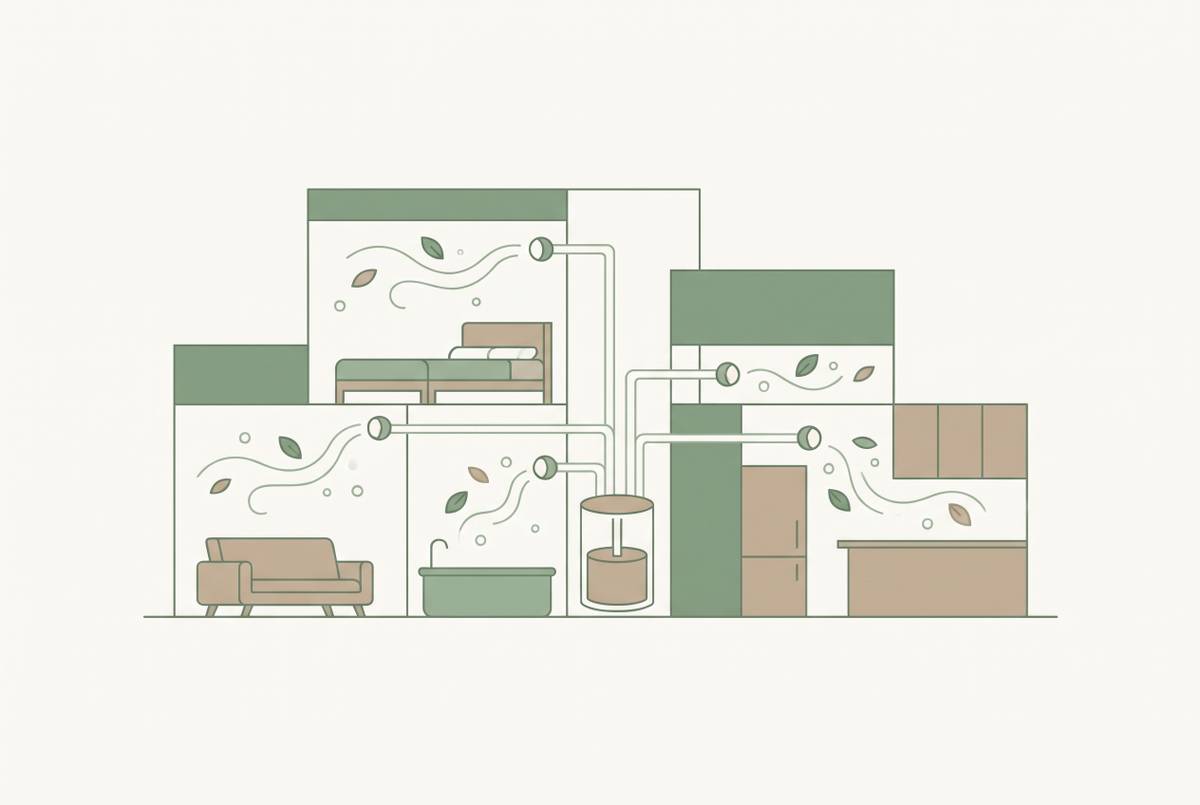
Recreating a luxury hotel scent experience at home starts with matching odor control to each room, then using scheduled cold-air diffusion for consistent atmosphere. Home fragrance products for odor-prone rooms work best when neutralization comes before scent. For a large room, the decisive diffuser criteria are rated coverage, adjustable intensity, and scheduling, rather than fragrance strength alone.
Why odor-prone rooms are a different problem than general home freshening
A kitchen, a litter-box corner, and a laundry closet can all smell unpleasant for different reasons. Cooking produces volatile fatty acids and sulfur compounds, while pet areas generate ammonia and bacterial off-gassing. Bathrooms have hydrogen sulfide and methane, and laundry areas hold moisture that helps mildew grow. These are distinct processes. Treating them alike asks a pleasant fragrance to do work it may never have been designed to perform.
The timing of those processes also changes what works. A bathroom odor event may be brief, while a litter box or trash bin presents an ongoing challenge. Laundry can retain dampness even when the room is not in use. Consequently, the useful starting question is not simply which scent smells best, but what is producing the odor and how long that source remains active. Fragrance preference comes after that diagnosis.
The functional difference between neutralizing an odor and masking it
Masking adds a competing scent without removing the existing odor molecules. When the added fragrance disperses, the original smell returns. Neutralization instead acts on the compounds responsible, through mechanisms including absorption by activated or bamboo charcoal, plant oil compounds binding to and breaking down odor compounds, or enzymatic action. A beautifully composed fragrance can still be only a cover.
Masking a litter box or trash bin means applying the product again and again because it changes what people smell without dealing with the odor that keeps coming. There is also a third approach, which is pre-emptive delivery. Rather than waiting for odor to enter the room, it intercepts the compounds before they become airborne. This approach has a particularly clear application in bathrooms, where timing can achieve more than fragrance intensity.
Why ingredient transparency is now a credibility problem for the whole category
What is actually inside it? The single ingredient declaration “fragrance” can conceal individual aromatic compounds, so a product marketed as “natural” may contain synthetic chemicals a buyer cannot identify. The marketing language does not provide enough information to judge the formula.
Conventional plug-ins and aerosols can emit volatile organic compounds, including known respiratory irritants. Enclosed bathrooms and laundry areas make that concern more relevant because ventilation is limited. Full ingredient disclosure and third-party certifications, including USDA Biobased and EPA Safer Choice, are the most useful signals when testing a product before purchase is not possible. They offer more substance than a reassuring adjective. Read beyond the scent description, especially for rooms where people and pets spend concentrated time.
Kitchens: why continuous low-level neutralization outperforms burst sprays
Cooking is intermittent, but its odor is cumulative. A session at the stovetop deposits volatile fatty acid residue on surfaces and soft furnishings, which can off-gas for hours afterward. A spray applied during cooking therefore does not necessarily address what lingers after the meal. The pan may be finished before the odor is. Because the odor lingers, a kitchen needs low-level neutralization even between the times when someone notices a smell.
Fresh Wave Odor Removing Gel illustrates the passive approach. Fresh Wave lists lime oil, pine needle oil, cedarwood oil, anise oil, and clove oil among the gel’s plant oils. The format works without someone remembering to apply it during cooking, unlike an on-demand option such as a fragrance spray. Coverage is the trade-off, as rooms larger than roughly 300 square feet require multiple jars. Placement near the trash area or in stovetop proximity is more useful than expecting one central jar to serve the whole space.
For homeowners seeking atmosphere as well as odor control, cold-air diffusion adds a separate capability. A clean, citrus-forward or herbal oil can provide continuous, controllable scent without heat degradation or added moisture. The scent intensity can be turned down during cooking and up afterward. That control avoids treating every stage of kitchen use alike. It is an upgrade in fragrance delivery that complements neutralization near persistent sources.
Pet areas: why format, concentration, and safety are all part of the same decision
Pet areas make the chemistry more demanding than kitchens do. Ammonia-based urine odors require active molecular breakdown, while passive absorption or masking can reduce the perceived smell without breaking down the ammonia compound. Fresh Wave’s gel uses plant oil compounds that bind to and break down odor molecules, and has no synthetic masking agents. Fabrics create another target for treatment. Mrs. Meyer's Pet Odor Neutralizer, in Coconut Leaf, 12 oz, uses odor-neutralizing technology and essential oils on carpets, upholstery, and bedding.
Safety cannot be separated from that format decision. Dogs live in roughly half of US households and cats in roughly a third, so animal exposure is hardly a specialist concern. Yet no home fragrance is guaranteed safe for every pet. Cats process some compounds in different ways from dogs, and birds have respiratory systems that are especially sensitive. “Non-toxic and alcohol-free” is a starting point for assessing safe use.
The practical approach is mild use, low concentration, and freedom for pets to leave the room. Lavender and sandalwood are generally considered safe for dogs at low concentrations when well dispersed, but bergamot warrants more caution. The ASPCA lists Bergamot Orange as toxic to dogs, while other guidance is less restrictive about diluted use. A cold-air diffuser using oils established as suitable for the animals present can offer low-intensity, scheduled delivery without a spray’s concentration spikes, but its controls do not make an unsuitable oil suitable.
Bathrooms: precision and pre-emption over fragrance intensity
Bathroom odor is typically episodic. A gel working all day therefore targets a different pattern from the one that needs attention after use. Poo-Pourri pioneered the pre-emptive toilet spray category with a formula that creates an essential-oil barrier on the water’s surface before use. Poo-Pourri describes that barrier as trapping unpleasant odors beneath the surface and keeping them out of the air.
Humidity changes the choice for ambient scent. Water-based ultrasonic diffusers add moisture, which can make a bathroom more humid and change the fragrance composition. Cold-air diffusion makes a dry mist without water dilution or heat degradation, so homeowners can use it for a steady background scent. Fresh wood, soft vanilla, or lighter sandalwood blends suit that restrained approach. Heavy or sweet fragrances can become cloying in a small enclosed space.
A hands-off alternative is the Enviroscent Plug Hub Kit. Enviroscent uses liquid-free paper refills with essential oil-based fragrances, lasting 45+ days per refill, and describes its formula as free from respiratory sensitizers and endocrine-disrupting chemicals. The format removes the liquid reservoir used by conventional plug-ins. It offers continuous ambient fragrance. That distinction keeps the choice grounded in the job, rather than treating every bathroom product as interchangeable.
Laundry zones and closets: scent-free absorption as the first line of defense
Laundry areas and closets need a different sequence. Damp fabrics, humidity, and poor ventilation encourage mildew, while fabrics can retain odor-producing volatile compounds. Adding fragrance before dealing with the moisture can make the room smell worse while leaving the cause in place. Absorption comes first, and scent follows after moisture is managed. The aim is not to give dampness a more appealing wardrobe.
Moso Natural Air Purifying Bag, in the 200g, 4-pack format, uses moso bamboo charcoal to absorb odors without releasing fragrance. Each 200g bag handles up to 90 square feet, making placement across a laundry room or separate closets more useful than assuming one bag serves every enclosure. Amazon Basics Gel Odor Eliminator with Activated Charcoal, in 17 oz, Lavender scent, is another charcoal-based option that works on its own and adds a light fragrance. Its charcoal serves absorption.
Citrus Magic Solid Air Fresheners, in Pure Linen, 8 oz, 3-pack, use passive diffusion for odor elimination for up to four weeks each. They suit a preference for ambient freshness without a powered device. A cold-air diffuser offers more control over the broader zone when placed at the laundry area’s entry, outside high-humidity enclosures. Clean linen or cedar-type oils fit that setting, but their role begins after the moisture problem is addressed.
How delivery format — continuous, on-demand, passive, or scheduled — determines whether a product actually fits its room
The room-by-room differences reveal two separate shopping questions. Does the product address the odor, and does its delivery match the room’s pattern of use? “Passive” describes how a gel or charcoal bag works without intervention, while “continuous” describes its availability over time. Those categories can overlap. An on-demand spray instead depends on someone acting at the right moment, which suits an acute event better than a source that persists unattended.
The familiar products now fall into clearer roles. Fresh Wave’s gel works on its own near kitchen or pet odor sources, while Moso bags absorb odors without adding scent in the areas they cover. Poo-Pourri relies on pre-emptive timing, and the pet neutralizer targets affected fabrics. Enviroscent keeps adding fragrance without anyone having to apply it or leave a gel jar in view. Scheduled cold-air diffusion serves a different preference, giving homeowners control over when the room is scented and how strongly.
Room size cuts across all those choices. The gel’s roughly 300-square-foot limit, the charcoal bags’ defined coverage, and a plug-in’s stated coverage rating limit how much space each can cover. Sprays also dissipate quickly in open-plan layouts. For a large room, the lesson is to match rated coverage to the actual footprint before comparing fragrance profiles. Short programmed intervals then address overcorrection, since greater scent intensity is not automatically better coverage or a more balanced atmosphere.
How do you make a house smell like a five-star hotel all the time with cold-air diffusion?
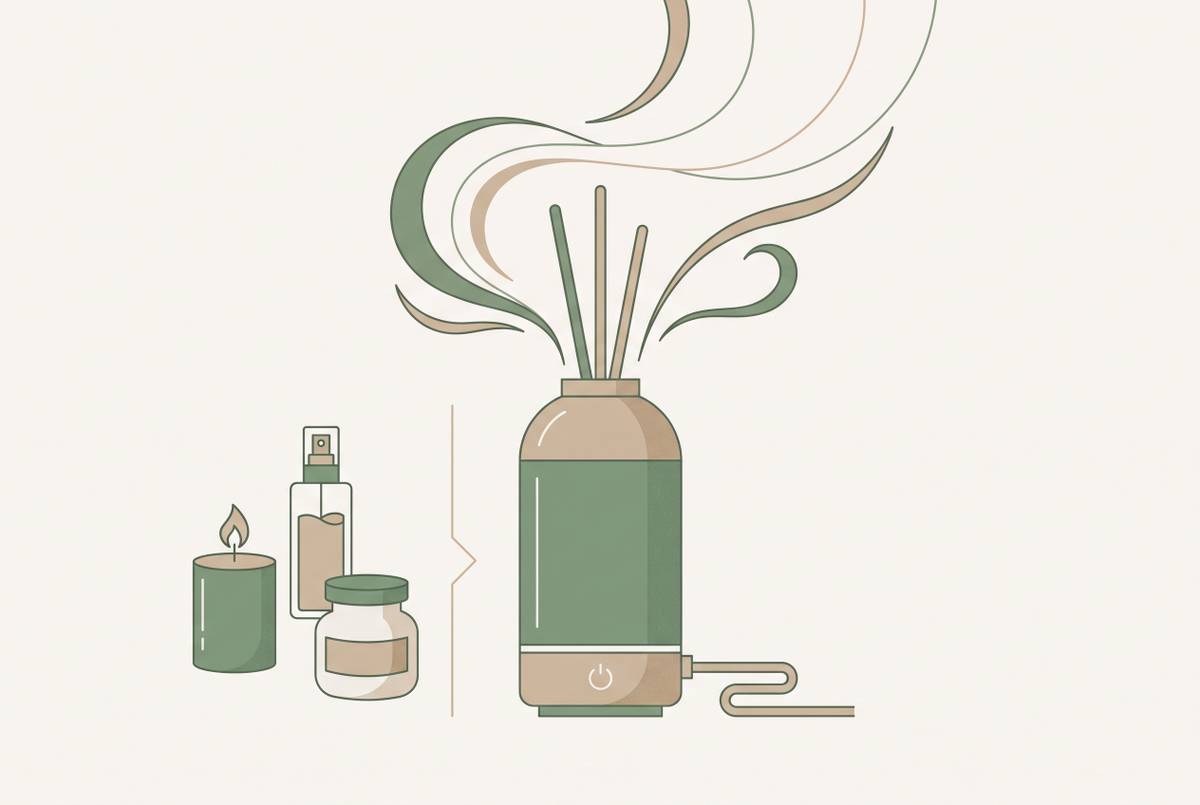
Cold-air diffusion gives homeowners more control over how a room smells than odor treatment alone. It atomizes fragrance oil into a fine, dry mist dispersed on compressed air, with particles remaining suspended. Because no heat is applied, delicate top notes are preserved instead of being degraded into a heavier, less complex impression. That is a difference in scent fidelity. Sprays and passive products may supply fragrance, but they do not combine the same control over note profile, intensity, and timing.
Programmed intervals matched to occupancy reduce unnecessary oil use while maintaining a baseline scent between odor events. The dry mist also keeps from adding humidity to bathrooms and spaces next to laundry areas. For homeowners pursuing the feel of a luxury hotel, the objective is a consistent, curated background. A diffuser rated for the room, with adjustable intensity and scheduling, supports that objective.
Oil selection still follows the room’s constraints. Kitchens suit citrus or herbal profiles, bathrooms lighter wood or vanilla, and laundry zones clean linen or cedar, while pet rooms require animal-specific suitability and restrained concentration. A busy kitchen, pet area, and small bathroom need different odor-control formats, with a controllable scent layer doing the separate work of making the home feel designed.