Mindfulness Gift Sets for Adults Who Already Have a Wellness Routine
Premium scents and smart diffusers upgrade an existing practice, not create a new one.
Most gift-givers miss something obvious: the person with a serious wellness routine isn't looking for new habits. They're already doing the thing. What they want is a better version of what they're already doing.
Most sensory input gets processed through a cognitive relay before it lands emotionally. Sight, sound, touch. They all hit processing centers first. Scent skips that entirely. Olfactory signals go straight to the brain's emotional and memory centers, which is why a smell produces a feeling before you've even named what you're smelling.
For someone mid-meditation or mid-breathwork, this matters practically. Scent can function as a physiological cue layered on top of a behavioral one. You're not interrupting the ritual. You're reinforcing it.
People who think seriously about home fragrance think room by room. Calming notes like sandalwood or jasmine for a bedroom. Clarity blends with eucalyptus or mint for a workspace. Fresh citrus for a bathroom that's supposed to feel like a reset. The question isn't just whether something smells nice. It's whether it fits where and how this person actually lives.
Lavender diffusing at 9pm teaches the nervous system that sleep is coming. Not in a vague, aspirational way. In a conditioned-association way that builds over weeks.
Personal fragrance, body care, and home scent increasingly work as a system rather than separate categories. A gift that slots naturally into that continuity gets used. One that arrives as a standalone novelty sits on a shelf.
What Makes a Fragrance Formulation Worth Adding to a Serious Wellness Practice
Someone who reads ingredient labels on their food and skincare is going to read them on home fragrance too.
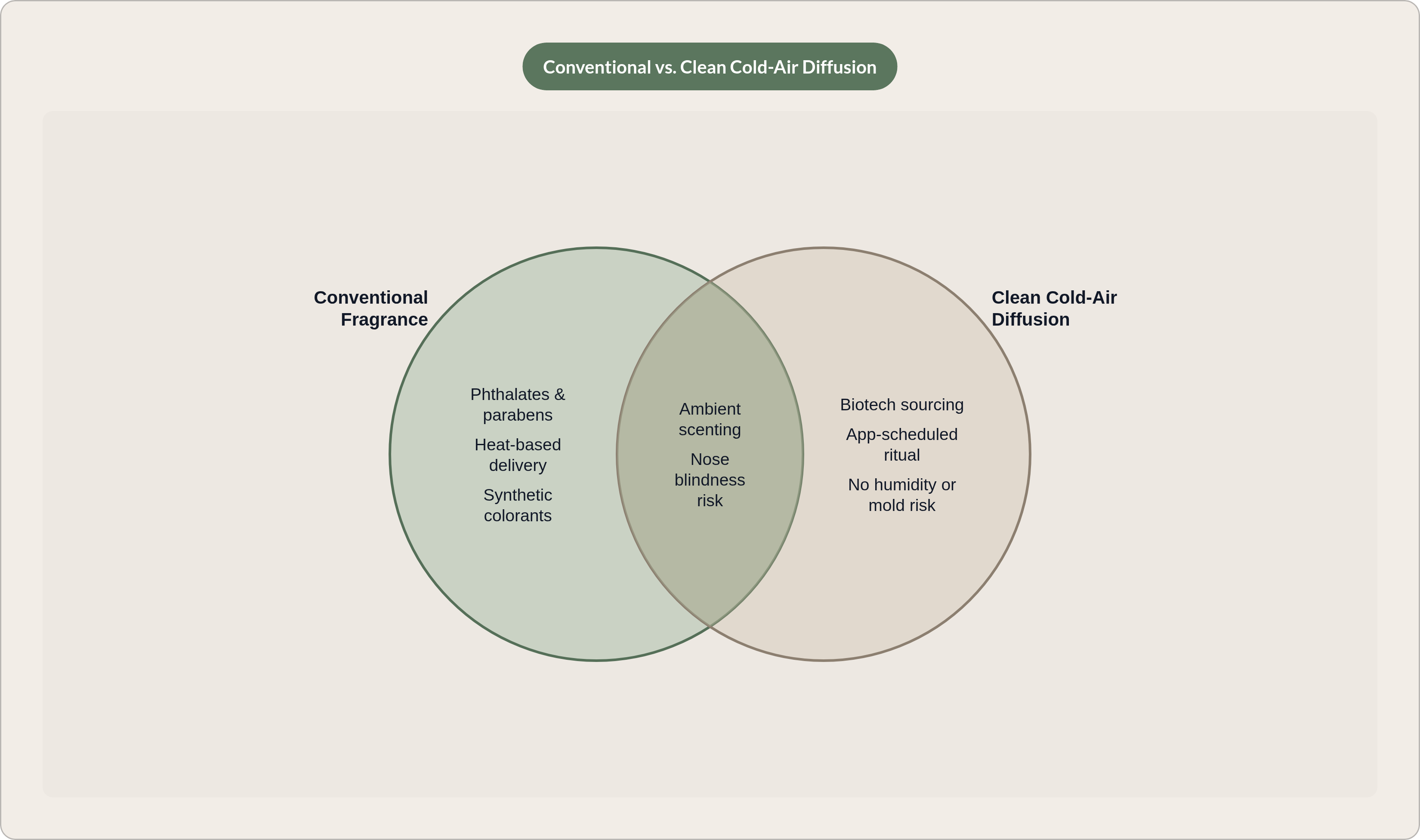
Conventional synthetics, phthalates, parabens: these are disqualifiers before the bottle even gets opened. The wellness-informed recipient wants something they'd feel comfortable diffusing in a space where they're intentionally focused on breathing.
So what does "clean" actually mean in practice? A few things worth checking:
- No phthalates, parabens, or synthetic colorants
- Natural and ethically sourced aromatic compounds
- Actual ingredient transparency, meaning the contents are disclosed rather than buried under the catch-all label of "fragrance"
- A verifiable third-party standard (Sephora Clean, for example) rather than a self-applied marketing claim
A third-party standard does the research work for the gift-giver. It removes the burden of ingredient scrutiny from the recipient. It signals that whoever chose this thought beyond aesthetics.
Vegan and cruelty-free certifications belong here too. The wellness buyer who extends ethical consistency from personal care to household products will notice whether a fragrance brand considered these things.
Biotech is quietly reshaping what "clean" sourcing even means. Precision fermentation now allows perfumers to recreate rare botanicals like sandalwood without harvesting the tree. Upcycled ingredients are showing up in niche fragrance launches in ways that weren't possible a few years ago. "Clean" is no longer just about removing bad things. Increasingly, it's about how thoughtfully the good things were sourced.
Why Cold-Air Diffusion Is the Delivery Method a Serious Wellness Practitioner Will Actually Keep Using
Most people with an established home routine have already cycled through candles and ultrasonic diffusers. They know the trade-offs.
A specialized atomizer breaks fragrance oil into microscopic particles propelled by cool, pressurized air. No heat. No water. The oil's aromatic compounds arrive intact, exactly as formulated.
- Heat degrades the therapeutic properties of essential oil compounds. Cold-air delivery doesn't touch them.
- No water means no humidity buildup, no mold risk, no residue on hardwood or electronics.
- Coverage is significantly larger than candles or reed diffusers. One device can scent a room, not just a corner of it.
- No dilution means the fragrance profile stays consistent from the first use to the last drop.
Bluetooth and Wi-Fi connectivity let the user schedule scent by time of day, adjust intensity, and rotate profiles through an app. Morning clarity blend at 7am. Evening wind-down at 9pm. At that point it's less a diffuser and more a scheduled ritual tool.
There's also the nose blindness problem. Familiar ambient scents stop registering after repeated exposure. A rotating schedule on a smart diffuser keeps the environment fresh in a way a single candle burning nightly will not.
For the right recipient, a cold-air diffuser paired with curated fragrance oils is a complete system. It replaces a collection of workarounds with one intentional piece of hardware.
How Destination-Inspired Scent Collections Deepen a Routine Without Requiring Explanation
The person with a serious meditation or breathwork practice is already doing something interesting: using routine to mentally travel somewhere without physically going anywhere. Scent accelerates this in a way other sensory inputs don't quite replicate.
A fragrance built on bergamot, lemon, and rosemary doesn't just smell pleasant. It places you somewhere specific. Memory and imagination activate before any conscious effort.
Hotels figured this out before most other industries did. The Bellagio runs a marine-citrus blend. 1 Hotels lean into woodsy, grounding notes. Xcaret Resorts use warm vanilla and sandalwood to signal calm and intimacy. Encounter those scents anywhere else and the full sensory memory of that place comes back. Place and scent encode together.
Generic "destination" labeling is losing ground to ingredient-led storytelling. A fragrance that foregrounds the actual botanicals of a region, hinoki from Japanese forests or sage from the Mediterranean coast, lands more authentically than a bottle simply labeled "Bali" or "Kyoto." The specificity of the ingredient is the story.
Choosing a scent profile tied to a place the recipient has mentioned loving, or somewhere they've talked about wanting to go, turns the object into a gesture.
What to Look for in a Mindfulness Gift Set That Will Actually Earn a Place in a Real Routine
Here's a useful test: can the recipient incorporate this on day one without interrupting what they already do?
If the answer requires setup time, research, or a behavioral change, the gift is adding friction instead of value.
A few things worth applying before committing:
- Is the formulation clean? Certified by a third-party standard, not just self-labeled. The recipient will check.
- What's the delivery method? Cold-air diffusion for a wellness-informed recipient who will notice the technical difference and actually care about it.
- Is the scent collection specific? Curated around a mood, a destination, or a time of day, rather than a random assortment that doesn't connect to anything.
- Will it last? Refillable, reusable, or expandable. A one-time experience falls short of something that becomes part of a daily routine.
- Does the brand mean something? Vegan, cruelty-free, connected to a values position the recipient would recognize and respect.
Sets that pair a smart cold-air diffuser with two or three fragrance oils (morning and evening, or a destination-themed trio) give the recipient a ready-made system. No assembly required.
Two practical things that are easy to overlook. Packaging matters for presentation, but it shouldn't be the substance. The actual signal of quality is in the formulation and the hardware. And if the recipient has pets or young children, confirming pet-safe and family-safe formulations explicitly is worth the extra minute.
Some diffuser and fragrance oil sets are built around these criteria and include charitable partnerships that direct a portion of every sale toward mental health services. For a recipient whose wellness practice connects to emotional or mental health in any direct way, that context adds something a purely aesthetic gift cannot.
The Difference Between a Gift That Gets Used Once and One That Becomes Part of the Routine
Most wellness gifts fail not because the recipient doesn't care about wellness. They fail because the gift doesn't fit the specific shape of how that person actually practices it.
Something used every day for two years isn't really a gift anymore. It's infrastructure.
The sensory layer is what separates those outcomes. Two people can meditate in the same room, but the person diffusing a clean, intentional fragrance has built a more immersive, conditioned environment. That environment compounds. The association between scent and mental state deepens over weeks, then months. The ritual becomes more automatic, more effective without any additional effort from the person doing it.
If the giver doesn't know enough about the recipient's specific routine to choose the right scent, that points toward a different kind of decision: a set that includes options, a morning and evening pairing, or a destination collection tied to a place the recipient has mentioned. The specificity requires the giver to have paid attention.
A smart cold-air diffuser with a curated fragrance collection is not a spa kit. It's a daily ritual tool. Brands like Aura House, a non-toxic home fragrance company built around cold-air diffusion and design-forward aesthetics, are what this category looks like when it takes that seriously. The right recipient will likely still be reaching for it two years from now, long past the point where "gift" is even the word for it.